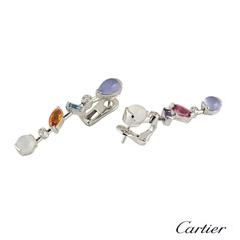
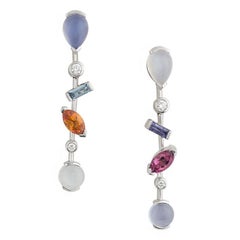
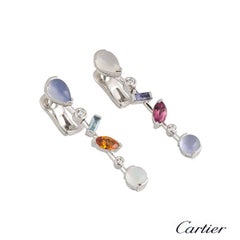
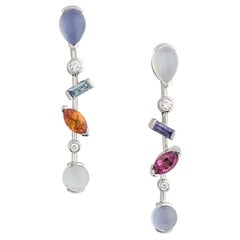
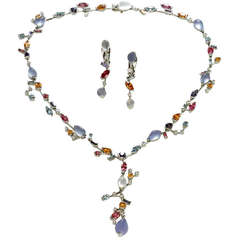
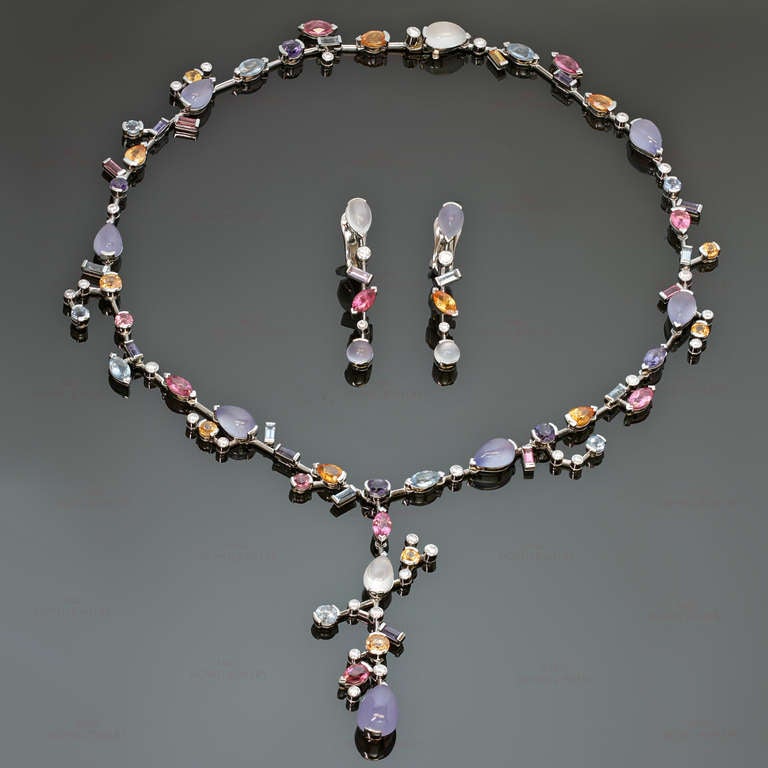
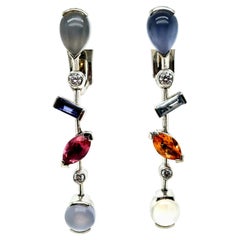
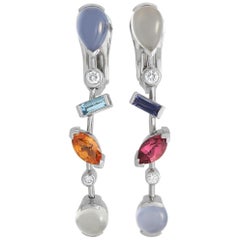
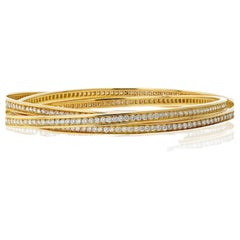
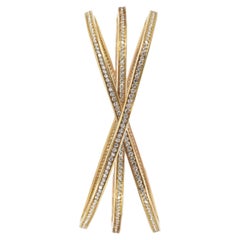
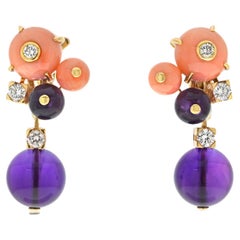
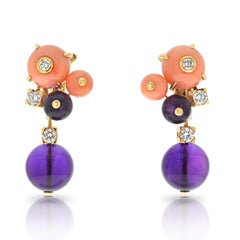
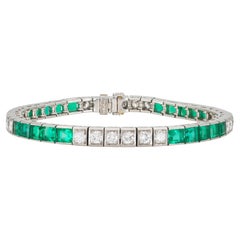
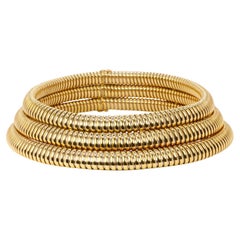
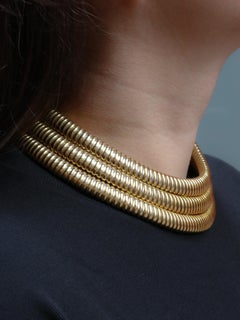
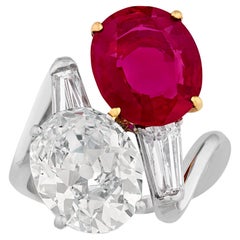
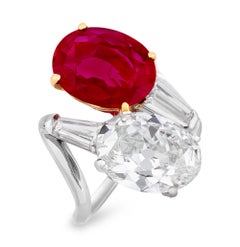
For its extraordinary range of bracelets, watches, rings and other adornments, French luxury house Cartier is undeniably one of the most well known and internationally revered jewelers in the world among clients both existing and aspirational.
Perhaps 1847 was not the ideal time to open a new watchmaking and jewelry business, as the French Revolution was not kind to the aristocracy who could afford such luxuries. Nevertheless, it was the year Louis-François Cartier (1819–1904) — who was born into poverty — founded his eponymous empire, assuming control of the workshop of watchmaker Adolphe Picard, under whom he had previously been employed as an assistant. Of course, in the beginning, it was a relatively modest affair, but by the late 1850s, Cartier had its first royal client, Princess Mathilde Bonaparte, niece of Napoleon Bonaparte, who commissioned the jeweler to design brooches, earrings and other accessories.
Under the leadership of Louis-François’s son, Alfred, who took over in 1874, business boomed. Royalty around the world wore Cartier pieces, including Tsar Nicholas II of Russia, the Maharaja of Patiala and King Edward VII, who had 27 tiaras made by the jewelry house for his coronation in 1902 and issued Cartier a royal warrant in 1904. (Today, the British royal family still dons Cartier pieces; Kate Middleton, Duchess of Cambridge, regularly sports a Ballon Bleu de Cartier watch.)
Cartier’s golden years, however, began when Alfred introduced his three sons, Louis, Pierre and Jacques, to the business. The brothers expanded Cartier globally: Louis reigned in Paris, Pierre in New York and Jacques in London, ensuring their brand’s consistency at their branches across the world. The trio also brought in such talents as Charles Jacqueau and Jeanne Toussaint.
One of Cartier’s earliest major successes was the Santos de Cartier watch — one of the world's first modern wristwatches for men. (Previously, a large number of people were using only pocket watches.) Louis designed the timepiece in 1904 for his friend, popular Brazilian aviator Alberto Santos-Dumont, who wanted to be able to check the time more easily while flying.
Cartier’s other famous timepieces include the Tank watch, which was inspired by the linear form of military tanks during World War I, and the so-called mystery clocks. Invented by watchmaker and magician Jean-Eugène Robert-Houdin and later crafted exclusively for Cartier in the house’s workshop by watchmaker Maurice Couët, the mystery clocks were so named because the integration of glass dials on which the clocks’ hands would seemingly float as well as structures that are hidden away within the base give the illusion that they operate without machinery.
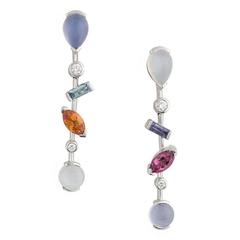
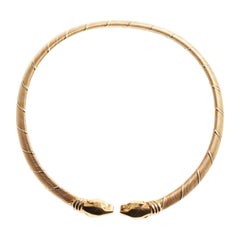
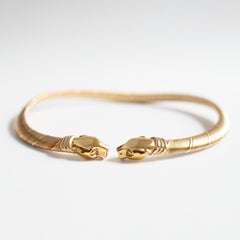
On the jewelry side of the business, Cartier’s internationally renowned offerings include the Tutti Frutti collection, which featured colorful carved gemstones inspired by Jacques’s trip to India and grew in popularity during the Art Deco years; the panthère motif, which has been incorporated into everything from brooches to rings; and the Love bracelet, a minimal, modernist locking bangle inspired by medieval chastity belts that transformed fine jewelry.
While the Cartier family sold the business following the death of Pierre in 1964, the brand continues to innovate today, renewing old hits and creating new masterpieces.
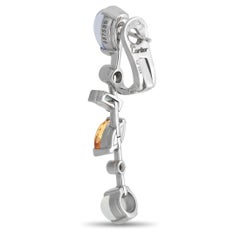
Find contemporary and vintage Cartier watches, engagement rings, necklaces and other accessories on 1stDibs.
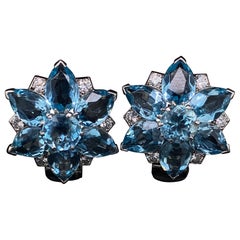
Perhaps the one gemstone that best embodies the glimmering blue of the ocean is aquamarine, not just in name but also in color. Aqua marina (Latin for water and sea), March’s birthstone, is often crystal clear and blue. Often affordable in price, vintage and antique aquamarine jewelry belongs in everyone’s jewelry box.
Aquamarine is a precious gemstone from the mineral beryl family. Its cousin is the emerald. Like other beryl varieties, aquamarines are rated 7.5 to 8 on the Mohs Hardness Scale. This means that they are soft enough for jewelers to cut to their client’s specs but also durable enough for daily wear.
On land or sea, aquamarines feature prominently in many folk tales, including one about mermaids gifting aquamarine to sailors to protect them during sea voyages. Worn around sailors’ necks as an amulet, it kept them from getting seasick and, most importantly, from shipwrecks. Considered a symbol of courage by some, aquamarine amulets were also favored by Egyptian and Hebrew warriors during battle.
Aquamarine has also made appearances on some of the grandest of great dames. The Brazilian government gifted Eleanor Roosevelt with a 1,847-carat aquamarine in 1935 and Queen Elizabeth II received a sizable aquamarine upon her 1953 coronation; this stone is now the focal point of her aquamarine tiara. And renowned Tiffany & Co. designer Jean Schlumberger made a diamond Bow setting for a 148.5-carat aquamarine, which was originally exhibited at the 1893 World’s Columbian Exhibition, now in the collection of the Field Museum of Natural History in Chicago.
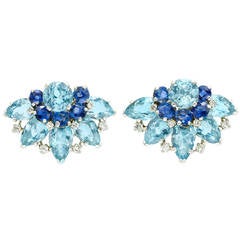
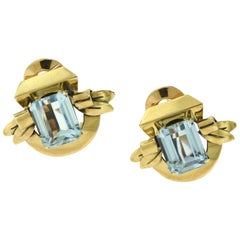
On 1stDibs, find a range of vintage and antique aquamarine jewelry that includes unique aquamarine rings, necklaces and other accessories.
In the United States, ear piercing didn’t really become popular until the 1950s and ‘60s, but our desire for a dazzling pair of vintage earrings has deeper roots than that. In fact, wearing earrings actually goes back thousands of years, and you can find many tangible connections between now and then in how we continue to talk about these treasured accessories.
Women wore ornamental earrings — studs and hoops at the very least — in Ancient Egypt, which is home to mines that are among the earliest sources of emeralds in the world. Emerald earrings are highly prized today, and their quality lies in their rich, saturated color. The highest-quality emeralds are green or bluish-green. Earrings worn by the affluent in early Roman civilizations were set with precious stones such as diamonds and pearls, and a clean-looking pop of pearl on the front of the lobe is as timeless as ever. Hoop earrings are imbued with symbolism and cultural significance for many, and on view in the Metropolitan Museum of Art’s Ancient Near Eastern Art Gallery is a pair of simple gold hoops from Mesopotamia dating to between 2600 and 2500 B.C.
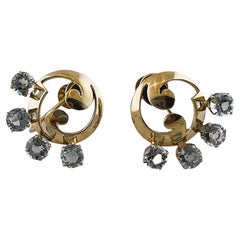
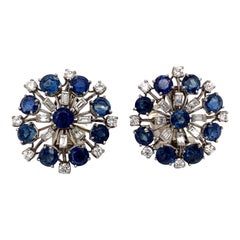
Today, ear piercing is very popular all over the world, and, as a result, it is difficult to overstate how much everyone pines for a good pair of earrings — modernist drop earrings, glamorous Victorian hoops, geometrically complex chandelier earrings, you name it. Sure, jewelry trends and the fashion darlings of social media come and go, but earrings have a staying power that seems impenetrable: The still-strong love affair between British royals and Cartier earrings is more than a century old, glossy 1970s hoops from legacy houses such as Bulgari and Van Cleef & Arpels remain the statement makers they’ve always been and although people have been stacking earrings for many moons, the allure of an expertly mismatched stack of charms and studs still feels fresh and new.
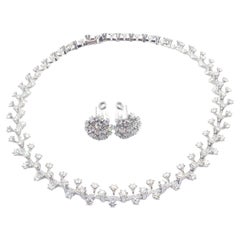
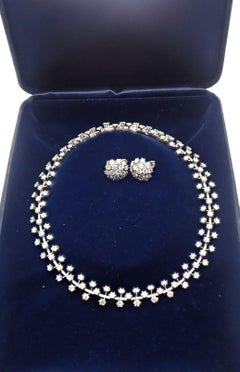
While there is no shortage of modern earring designs to choose from, the classics, like coral earrings, Art Deco–style earrings and diamond drop earrings are still heavy hitters. On 1stDibs, find a wide range of antique, new and vintage earrings today.